What is a crypto portfolio?
A crypto portfolio is the complete set of digital assets you own across wallets, exchanges and other accounts. A useful portfolio view includes not only coin balances, but also purchase history, current allocation, average purchase price and the value converted into one base currency.
Owning several tokens does not automatically make a portfolio diversified. Many cryptoassets move in the same direction, and projects that appear different can depend on the same network, custodian or market narrative. The goal is to understand where risk is concentrated and keep the structure aligned with your plan.
How to build a crypto portfolio step by step
Start with decisions you can control. Price predictions should not determine the structure of a long-term plan.
- 1
Define the purpose, time horizon and maximum loss you can realistically tolerate.
- 2
Separate emergency savings and near-term spending from speculative capital.
- 3
Choose target categories and maximum position sizes before selecting individual assets.
- 4
Research liquidity, custody, token supply, technology, governance and regulatory risks.
- 5
Record every purchase, sale, fee and transfer using one base currency.
- 6
Review the allocation on a schedule and rebalance only according to predefined rules.
Educational crypto portfolio planner
Enter an amount, choose a template and adjust the category shares. The calculator does not use forecasts or live prices; it simply turns percentages into amounts so you can examine concentration.
Educational template
Core assets
Large, liquid networks with the longest public track record, such as BTC and ETH. (BTC, ETH)
Established alternative networks
Liquid projects with active ecosystems and a clear use case. (TRX, LTC, BCH, DOT, GRT, SOL, BNB)
Liquid reserve
Cash or stable-value assets; stablecoins still carry issuer, custody and depeg risks. (USDT, USDC, DAI)
Experimental positions
Smaller or newer projects with a materially higher probability of loss. (DOGE, SHIB, PEPE, SUI, HBAR)
Total allocation
100%
The allocation totals 100%.
Example allocation by cryptocurrency
The BTC/ETH ratio changes with the selected profile. Alternative and experimental positions are split equally between two selected assets, while the reserve uses USDT.
- BTC$3,30033%
- ETH$2,20022%
- SOL$1,00010%
- BNB$1,00010%
- USDT$1,50015%
- SUI$5005%
- HBAR$5005%
How to evaluate cryptocurrencies before adding them
A logo, past return or social-media following is not a due-diligence process. Compare projects using the same criteria and write down why each position belongs in the portfolio.
Liquidity and market depth
Check whether meaningful orders can be executed without excessive slippage and where the liquidity is concentrated.
Purpose and real usage
Understand what the network or token does, who uses it and whether the token is actually required for that activity.
Supply and incentives
Review circulating supply, unlock schedules, inflation, insider allocations and incentives that may create sell pressure.
Security and decentralization
Consider validator concentration, admin keys, audits, outages, bridge exposure and the consequences of a critical failure.
Custody and access
Know where the asset can be stored, how recovery works and which exchange, issuer or smart-contract dependencies remain.
Regulatory and counterparty risk
Rules differ by jurisdiction. Stablecoins, exchange tokens and yield products introduce distinct legal and counterparty risks.
What to track in a cryptocurrency portfolio
Reliable records separate portfolio management from checking coin prices. Transfers between your own accounts should not be counted as profit, and fees should remain part of the transaction history.
- Current value
- The balance of every asset converted into the same base currency.
- Portfolio share
- Each position as a percentage of the complete portfolio.
- Average purchase price
- The weighted cost per coin across all recorded purchases.
- Unrealized result
- The difference between current value and the recorded cost basis.
- Cash flow
- Deposits, withdrawals, fees and transfers kept separate from market performance.
- Target deviation
- The gap between the actual and planned share used for rebalancing decisions.
How portfolio rebalancing works
Market moves change portfolio weights. Rebalancing restores target shares so that one successful or unsuccessful position does not silently redefine your risk level.
- 1
Choose a review rule: a fixed calendar interval or a maximum deviation from target.
- 2
Calculate actual shares using the same base currency and include every account.
- 3
Compare the benefit of a trade with fees, taxes, spreads and custody costs.
- 4
Where appropriate, direct new contributions toward underweight categories before selling.
- 5
Record the decision and update target shares only when your goals or risk tolerance change.
Crypto portfolios in 2023: results and useful lessons
The query “crypto portfolio 2023” often leads to historical examples and performance reports. They are useful for understanding market cycles, but a portfolio that worked in one year is not a template for the next.
CoinGecko’s annual industry report describes 2023 as a recovery year after the 2022 contraction. The result also shows why allocation can drift quickly when one large asset materially outperforms other holdings.
- Total crypto market capitalization increased 108.1%, from about $829 billion to $1.72 trillion.
- Bitcoin increased 155.2% over the year amid growing expectations for US spot ETF approval.
- Quarterly performance varied substantially, so the year-end result concealed meaningful drawdowns and periods of low liquidity.
- The practical lesson is to track target shares and risk rather than copy the previous year’s winners.
Risks and basic security rules
Cryptoassets can be exceptionally volatile and speculative. Diversification within crypto does not remove market, custody, fraud or regulatory risk.
- Only expose capital whose complete loss would not prevent you from meeting essential obligations.
- Keep seed phrases and private keys offline and never enter them into a portfolio tracker.
- Use unique passwords, multifactor authentication and withdrawal allowlists where available.
- Treat stablecoins as instruments with issuer, reserve, custody and depeg risks—not as guaranteed cash.
- Verify addresses and networks with a small test transfer before moving a large balance.
- Keep a separate record of taxes and local reporting obligations.
From a plan to reliable records
Track your crypto portfolio in Finance Portfolio
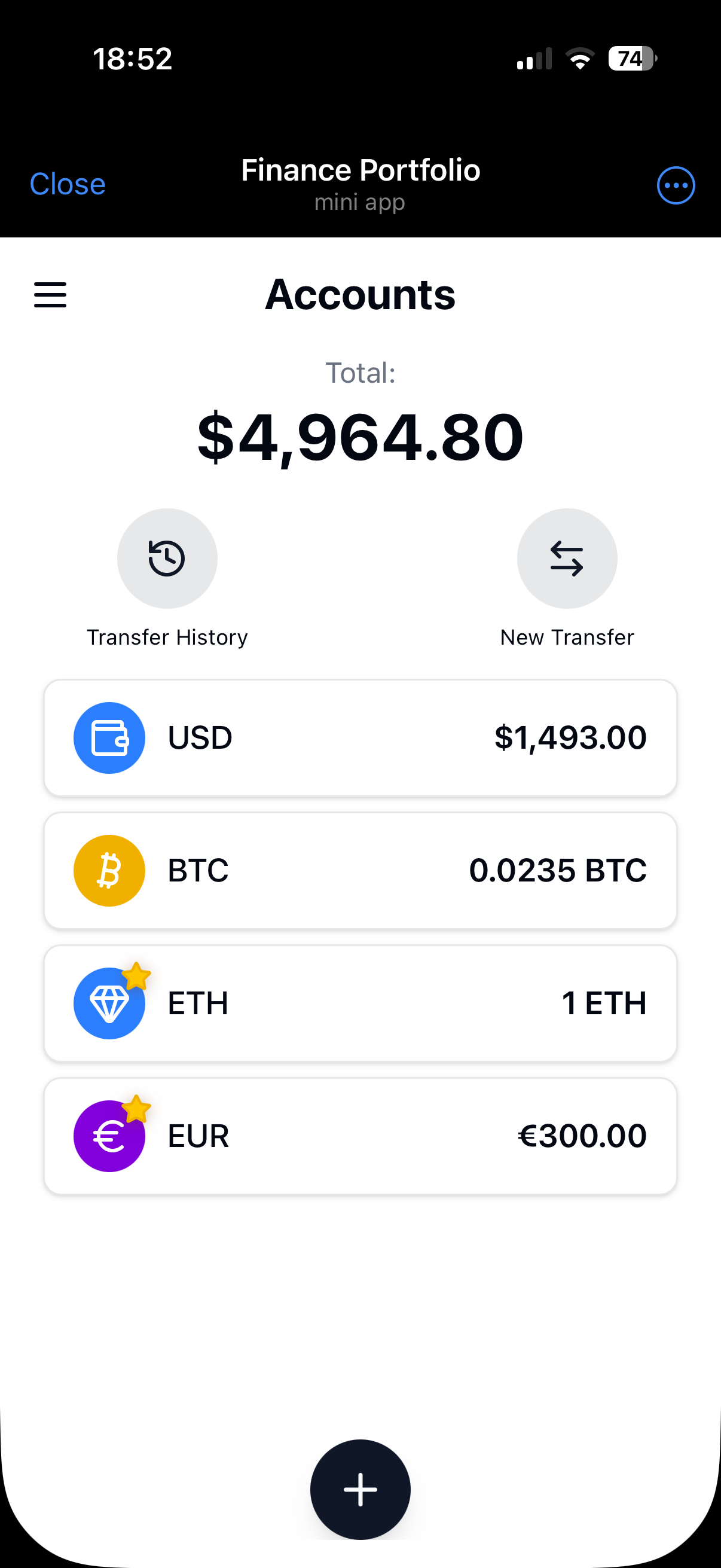
Finance Portfolio is a Telegram Mini App that keeps crypto accounts, fiat accounts, income and expenses in one financial overview. Add your actual transactions instead of sharing private keys.
Balances are converted into your selected base currency, while purchase history is used to calculate the average purchase price for each supported coin.
- Separate accounts for selected top-100 cryptocurrencies
- Average purchase price based on recorded transactions
- Fiat and crypto balances in one base currency
- Transfers between accounts without treating them as income
- Free plan without advertising
Finance Portfolio is an accounting and analytics tool, not an exchange, custodian or investment adviser. You remain responsible for investment decisions and asset custody.
Frequently asked questions
How many cryptocurrencies should a portfolio contain?
There is no universal number. Each additional asset should have a clear role and remain small enough to track properly. Several highly correlated tokens may add complexity without meaningful diversification.
Are Bitcoin and Ethereum enough for a crypto portfolio?
They can form a simple crypto allocation, but they still carry substantial volatility and technology, custody and regulatory risks. The appropriate structure depends on your goals and total financial position.
Should stablecoins be included?
A stablecoin can provide liquidity, but it is not risk-free cash. Evaluate its issuer, reserves, redemption mechanism, network, custody and history of maintaining its peg.
How often should a crypto portfolio be rebalanced?
Use a predefined rule, such as a quarterly review or a material deviation from target. Consider fees, taxes and spreads before making a trade.
How is average purchase price calculated?
Divide the total recorded cost of purchases, including costs you choose to include, by the total amount acquired. Sales and local tax rules may require a separate cost-basis method.
Does a crypto portfolio tracker need private keys?
A manual tracker such as Finance Portfolio does not need a seed phrase or private key. Never provide those secrets to an analytics service.
Can I use the 2023 portfolio examples today?
Historical examples explain how a past market behaved; they do not show what will work now. Reassess every asset, allocation and risk using current information.
A useful portfolio starts with a rule, not a prediction
Define what each category is for, cap the positions you can afford to lose, record every transaction and review the structure consistently. The editable templates above can help you test concentration, but your final decisions require independent research.
Once you have a plan, Finance Portfolio can keep the actual balances and average purchase prices close at hand inside Telegram.